
Cooking Japan: Restaurant Game
EVER PROFIT INDUSTRIAL LIMITEDAdventure
4.547.00 Reviews
- Version
- 1.0.7
- Installs
- 100.00K
- Age Rating
- Everyone
Screenshots
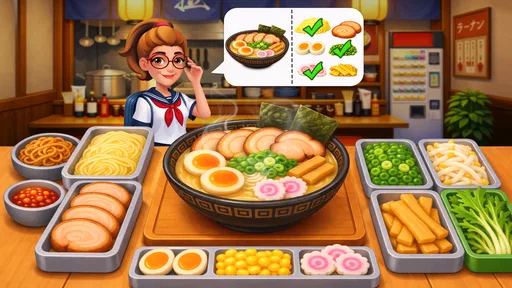

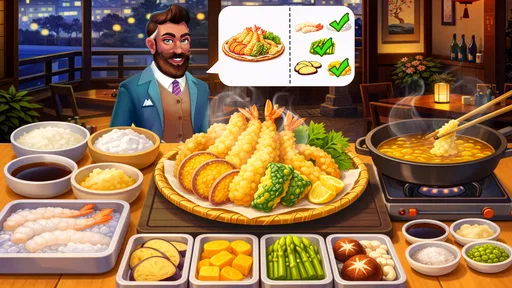


Our Review of Cooking Japan: Restaurant Game
 Analysis by Appyee
Cooking Japan: Restaurant Game is the kind of adventure game I open when I want something light, colorful, and easy to understand without committing to a long story or complicated controls. Its central idea is simple: I step into a food-focused world built around Japanese cooking, then move beyond that theme toward dishes inspired by other parts of the world. That gives the game a more relaxed identity than a traditional action adventure, while still leaving room for discovery.
After spending time with it, I see the appeal clearly. It is aimed at players who enjoy the rhythm of preparing food, exploring a themed setting, and gradually seeing what comes next. It is not trying to replace a deep role-playing game or a serious cooking simulator. Instead, it offers a casual way to pass a few minutes at a time, especially when I want something more interactive than watching a video but less demanding than a competitive game.
Cooking Japan: Restaurant Game in everyday play
I look at Cooking Japan: Restaurant Game as a food-themed adventure that’s easiest to judge in the small gaps of an ordinary day. In this section, I’ll focus on how its Japanese cooking premise can fit a casual routine, then turn to the practical question of how comfortably different people can read and navigate it. A useful test is whether you can pick it up without needing to remember a complicated plan from your last session.
A food adventure with an approachable starting point
The game comes from EVER PROFIT INDUSTRIAL LIMITED and sits in the adventure category. That combination is worth noting because the food theme is only part of the experience. The setting and presentation encourage exploration, but the cooking focus keeps the action familiar. I never need to understand an elaborate fictional universe before enjoying the basic premise: prepare food, move through a culinary journey, and see how Japanese dishes connect with a wider selection of world cuisine.
The strongest first impression is its accessibility. A player who has never touched a cooking game can understand the attraction immediately, while someone who already enjoys restaurant-themed games will recognize the familiar satisfaction of turning ingredients and tasks into completed dishes. The “Japan first” identity also gives it a more distinct flavor than a generic restaurant title that simply places recipes in an interchangeable kitchen.
That does not mean the game is designed only for people interested in Japanese food. I would describe the theme as an entry point rather than a restriction. The broader food journey makes it easier for players with different tastes to stay interested, particularly if they enjoy discovering how each stage changes the atmosphere or menu direction.
What the free download really means
The game is free to download, so there is no purchase required before I can decide whether its style suits me. That is a meaningful advantage for a casual title: I can test the pacing, presentation, and amount of repetition without paying upfront. The age rating is Everyone, which also makes it a reasonable choice for households looking for a gentle food-themed game rather than something built around combat or mature subject matter.
There are in-app purchases ranging from $0.99 to $99.99 per item. I treat that range as a reason to play thoughtfully rather than as an automatic criticism. The free entry point provides the opportunity to evaluate the game first, but anyone who spends should decide on a personal limit before buying. The most sensible approach is to enjoy the opening experience, identify whether the cooking loop remains fun without extra spending, and only then consider whether an optional purchase adds enough value.
In practical terms, the game offers paid value only to players who already like its routine and want to invest more in it. A purchase cannot make an unfamiliar game a better match for your taste. If the basic food adventure does not hold your attention, spending more is unlikely to solve that problem. For me, the free access is the main reason to try it; the optional purchase range means I would keep my expectations and budget controlled.
How the cooking loop feels over a short session
The most useful way to approach this game is in short sessions. I can imagine opening it while waiting for an appointment, taking a break between tasks, or relaxing at the end of the day. Food games work best in that setting when the objective is visible and the next action is easy to understand. This title’s cooking-and-exploration concept naturally supports that kind of stop-and-start play.
A realistic everyday scenario would be a player with ten spare minutes after dinner. Instead of beginning a large adventure that demands a long uninterrupted session, I would enter the game, complete a small amount of food-related progress, and close it when I am ready. That makes it more convenient than many adventure games that depend on lengthy battles, dialogue sequences, or a carefully preserved storyline.
There is also a nice mental contrast in playing a game about preparing food after a busy day. The theme feels calmer than a racing game or an action title, and the worldwide dish angle gives the experience a sense of movement without requiring a dramatic narrative. I would not call it a replacement for a real cooking lesson, but it can provide a playful introduction to the idea that food traditions are connected to place and culture.
Three practical ways to get more from it
My first tip is to treat the Japanese setting as a learning framework for the game’s rhythm, not just as decoration. Pay attention to how the experience introduces its food identity before judging the later world-dish direction. If you rush through the opening only looking for fast rewards, you may miss the reason this title feels different from a standard restaurant game.
Second, use short sessions to judge repetition honestly. A cooking game can feel satisfying at first because every task is new, then become less engaging once the same pattern returns. Rather than making a purchase early, I would play across several separate sessions. This reveals whether the loop remains enjoyable when the novelty of the Japanese theme has settled.
Third, decide in advance what “value” means to you. If value means a free, friendly game for occasional breaks, the title has a clear advantage. If value means a large adventure with complex systems, deep character development, or long-term strategic planning, it may not meet that expectation. Making that distinction before downloading helps prevent the common mistake of expecting a casual cooking adventure to behave like a full-scale console game.
Where it differs from usual alternatives
Compared with a conventional cooking simulator, this game appears more interested in the journey around the food than in reproducing professional kitchen technique. That makes it easier to approach, but it also means a player seeking precise culinary realism should look elsewhere. I would choose a dedicated simulation when I want detailed preparation rules, strict timing, or a closer approximation of restaurant management.
Compared with a typical adventure game, the food theme makes the experience less intense. There is no need to enter it expecting combat-driven tension or a sweeping fantasy quest. Its appeal comes from the combination of cooking and discovery. That is a strength for players who want a softer adventure, but a limitation for anyone who needs constant danger, complex puzzles, or a dramatic plot to stay engaged.
It also differs from competitive restaurant games because the main attraction is personal progress rather than proving that I am faster or better than another player. That can make it more comfortable for children and casual players, while leaving competitive gamers with less pressure and excitement than they may want. The right comparison is therefore not “which game is hardest?” but “which game gives me the kind of food pastime I actually want?”
What may frustrate experienced players
The biggest likely trade-off is depth. A broad food theme can create variety, but variety alone does not guarantee that every dish or location feels meaningfully different. Players who have spent a lot of time with restaurant games may recognize familiar patterns quickly. For them, the Japanese presentation and global food direction may be enjoyable, but perhaps not enough to sustain long sessions.
The free-to-play structure is another point to watch. Because purchases can reach $99.99 per item, I would not approach the game casually with an unrestricted payment method. The best experience for a budget-conscious player is to enjoy the free portion first and regard spending as optional rather than necessary. If a game’s progress feels uncomfortable without buying something, that changes the value calculation sharply.
There is also a difference between being suitable for Everyone and being equally engaging for every age. The rating makes the subject matter broadly approachable, but older players may want more complexity than younger players do. Parents can reasonably consider it as a gentle option, while adults should decide whether a relaxed food loop is enough to keep them returning.
Who is most likely to enjoy it?
I would recommend it first to players who like casual adventure games with a strong visual theme. It is especially suitable for people who enjoy Japanese food culture, restaurant settings, and the feeling of moving from one culinary idea to another. It can also suit families looking for an Everyone-rated game that does not depend on frightening scenes or aggressive competition.
It is a good fit for someone who wants a free trial before making any financial decision. That matters because the central question is personal: do you enjoy the cooking routine enough to return? The free download lets you answer that through play instead of relying on screenshots or a short description.
I would be more cautious recommending it to players who want realism, a long narrative, or advanced strategy. A serious cooking enthusiast may prefer a simulation with more technical detail. An adventure fan who measures quality by story and exploration may find the food focus too narrow. Likewise, anyone uncomfortable with optional purchases should keep the spending controls firmly in mind, even though the game itself is free to start.
Current release details and device expectations
The game was released on March 26, 2026, and the current version is 1.0.7. It requires Android 6.0 or later, so it is accessible to owners of many older Android devices as well as newer phones. That broad compatibility is useful for a casual title because players do not necessarily need a recent flagship phone to try it.
Its audience has already grown beyond a small experiment: the game has over 100 thousand installs, with a 4.5 average from around 1.5 thousand ratings. Those figures suggest a generally positive reception among the people who chose to rate it, while the separate review count of 47 gives the written feedback a smaller base. I would read the rating as encouraging rather than conclusive, then rely on the free download to form my own opinion.
For daily use, I would keep the game in the category of an occasional comfort title. It is easy to recommend as something to test during a quiet moment, but I would not promise that it will become a player’s main game. Its success depends heavily on whether the cooking loop, Japanese identity, and gradual world-food exploration continue to feel rewarding after the initial curiosity fades.
My value judgment before spending
The clearest value comes from the fact that I can enter without paying. That makes the game low-risk for curious players and gives the developer a chance to earn trust through the actual experience. The paid items create a second question rather than changing the first one: once I know I enjoy the game, do those purchases provide enough personal benefit to justify their cost?
I would not judge the title by the highest purchase amount alone, but I would take that ceiling seriously. A player who wants a completely predictable, no-spend experience should approach carefully and avoid assuming that every desirable option will be free. A player comfortable with optional spending can still find value, provided the amount remains proportionate to the entertainment received.
My own rule would be simple: play without buying first, set a small limit if I later decide to spend, and stop if the game begins to feel like a payment task rather than a cooking adventure. That workflow is more useful than treating the free label as either a guarantee of unlimited value or a reason to dismiss the game immediately.
My final recommendation
Cooking Japan: Restaurant Game is worth trying if you want a free, Everyone-rated adventure built around Japanese cooking and a wider tour of world dishes. I like its approachable identity and its suitability for short breaks. The food theme gives it a gentler personality than many adventure games, while the exploration angle keeps it from feeling like a plain recipe checklist.
I would skip it if your priority is deep simulation, demanding strategy, competitive play, or a substantial story. I would also skip spending until the free experience has proved that its routine genuinely fits your habits. The purchase range makes budget awareness important, but it does not remove the usefulness of the free starting point.
Overall, I see it as a pleasant casual choice rather than an essential download. It offers the most value to players who enjoy food-themed discovery and are happy to play in manageable sessions. If that sounds like you, install it, test the rhythm across a few days, and decide based on how often you voluntarily return. That is the fairest measure of whether this particular restaurant adventure deserves a place on your phone.
Verdict
Strengths of Cooking Japan: Restaurant Game
- Relaxing gameplay suitable for short sessions
- Wide variety of Japanese dishes to prepare
- Simple controls make it accessible for beginners
- Restaurant upgrades add a satisfying sense of progress
- Colorful visuals give the game a friendly atmosphere
Limitations of Cooking Japan: Restaurant Game
- Some upgrades may require considerable time to unlock
- Repeated cooking tasks can feel monotonous over time
- Limited strategic depth for experienced simulation players
- Progress may feel slow without watching optional ads
- Requires patience when managing multiple customer orders
Other Releases by EVER PROFIT INDUSTRIAL LIMITED
View All
Flower vs zombie: City Defense
Strategy3.7

Anime Shimeji, Pet On Screen
Personalization0.0
Similar Picks in This Category
View All
Roblox
Roblox Corporation4.2

Pokémon GO
Niantic, Inc.3.5

Ninja warrior: legend of adven
TOH Games4.6

Ninja Arashi
Black Panther4.6

Eyes - The Horror Game
Fearless Games sp. j.4.5

Critical Action:Gun Strike Ops
FPS Shooter & Action Game4.3
Frequently Asked Questions
What is Cooking Japan: Restaurant Game about?
Cooking Japan: Restaurant Game is a time-management cooking game focused on preparing and serving Japanese-inspired dishes. You typically take orders, cook recipes, combine ingredients, upgrade kitchen equipment, and serve customers before their patience runs out. The game is designed for casual play, with progressively more demanding stages and restaurant challenges that test speed, accuracy, and resource management.
Can I play Cooking Japan: Restaurant Game offline?
Many cooking games allow players to complete previously downloaded levels without an internet connection, but certain features may require online access. Advertising, cloud saves, updates, special events, leaderboards, and in-app purchases may not work offline. Before relying on offline play, it is best to launch the game once while connected and check whether the specific version installed on your Android or iOS device supports offline access.
Does Cooking Japan: Restaurant Game contain advertisements or in-app purchases?
The game may include optional purchases for coins, boosters, extra lives, or other progress-related items, and advertisements may appear between levels or when claiming bonus rewards. You can usually play without spending money, although purchases and rewarded videos may help shorten waiting times or make difficult stages easier. Check the store listing and your device’s purchase settings before downloading.
Is Cooking Japan: Restaurant Game suitable for children?
Cooking Japan: Restaurant Game is generally easy to understand because its main mechanics involve tapping ingredients, preparing food, and serving customers. However, parents should review the game’s age rating, advertising policy, and available in-app purchases before allowing children to play. Fast-paced levels, optional spending, and frequent reward prompts may be more appropriate for supervised play, particularly on shared devices.
What devices are compatible with Cooking Japan: Restaurant Game?
Compatibility depends on the version published for Android or iOS, as well as the operating system requirements set by the developer. Most recent smartphones and tablets should provide a smooth experience, but older devices may encounter slower loading, reduced performance, or limited storage space. Always check the official store page for the latest minimum system requirements, download size, and supported operating-system versions.
Play our best games!


